Mar 12, 2026
You made the investment. You sat through the demos, signed the contract, and integrated a new Accounts Receivable (AR) automation tool. The promise was simple: lower DSO, faster cash flow, and a more efficient finance team.
Yet, six months later, the needle hasn't moved. Your day sales outstanding meaning: the average number of days it takes to collect payment after a sale: remains stubbornly high.
The reality is that software is a tool, not a strategy. If you layer expensive technology over a fragmented process, you don't get efficiency; you get expensive chaos. Improving DSO requires a fundamental shift in how your organization views receivables: transitioning from a transactional "back-office" function to a strategic data asset.
Here are five specific reasons your DSO hasn't improved after buying AR software and exactly what you need to do to fix it.
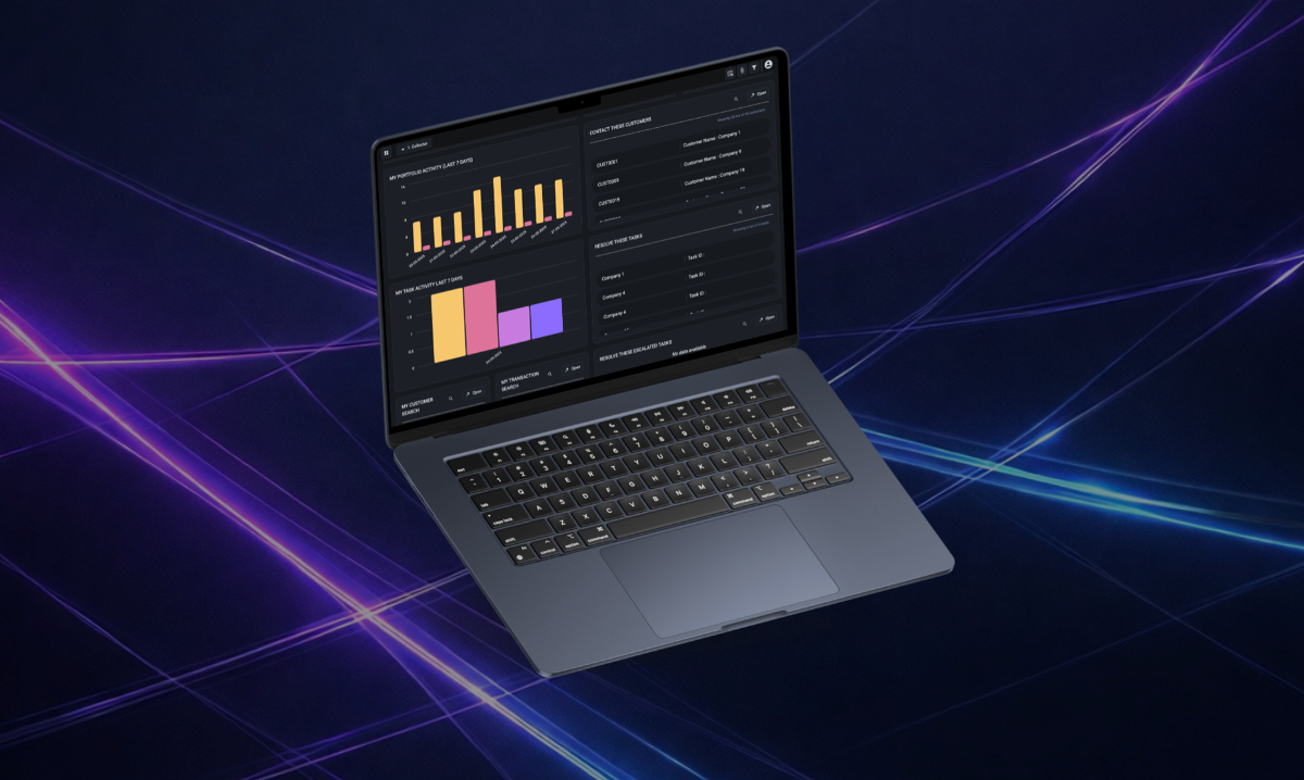
Most AR software on the market acts as a glorified "email blaster." It takes your existing dunning schedule and automates it. If your manual strategy was to send a polite reminder at day 30 and a firm one at day 45, the software does exactly that: just faster.
The problem? Static dunning is inherently inefficient.
When you treat every customer the same, you waste resources on low-risk payers and fail to intervene early enough with high-risk ones. Days sales outstanding means very little if it isn't backed by granular customer segmentation.
The Fix: Strategic SegmentationModern AR intelligence should adapt collection strategies based on real-time behaviour.
Without this intelligence, automation simply speeds up ineffective processes. If you want the platform-level view of why “modules” and bolt-ons keep failing AR teams, read Beyond the Module: How a Unified DDM Platform Cuts Tech Costs by 70%. To see how much manual baggage might be holding you back, read our deep dive on the hidden costs of manual AR processes.
Visual: A minimalist, near-black background featuring a single, glowing neon purple line that splits into three distinct paths, representing customer segmentation and intelligent routing.
Data fragmentation is the silent killer of DSO improvement. Many finance teams operate in silos, where the AR software is disconnected from the broader ecosystem of accounts receivable or accounts payable.
If your software doesn't have a real-time heartbeat connected to your ERP, CRM, and billing systems, your collectors are flying blind. They might be calling a customer for payment on an invoice that is currently being disputed in the CRM, or worse, they’re chasing a "key account" that the sales team just promised a grace period to.
The Impact of Fragmented Data:
At Invevo, we solve this through our Dynamic Data Model (DDM). Unlike legacy relational models (used by platforms like HighRadius) which are rigid and slow to adapt, DDM allows for 90% faster onboarding. It maps to your unique business logic instantly, ensuring that your collection strategy is always fuelled by "live" data.
If your team only starts working once an invoice is past due, you have already lost the DSO battle. Traditional credit control is reactive: the invoice is sent, the due date passes, and only then does the "chasing" begin.
To truly drive down DSO, you must move toward a proactive, predictive model. PwC’s Global Working Capital Study highlights how leading organisations are increasingly leaning on analytics (including predictive approaches) to spot risk earlier and protect cash outcomes. See the PwC reference here: PwC Global Working Capital Study.
How to get proactive:
Proactive collections turn your AR department into a source of cash flow predictability.
Visual: An Apple-style minimalist graphic showing a dark field with a thin, glowing blue neon line representing a timeline. Small dots appear on the line before a "Due Date" marker, symbolising proactive intervention.
Software is only as good as the people using it. Many AR implementations fail because the "old guard" of the finance team continues to operate out of habit.
Common red flags include:
If your team reverts to old processes, the expensive software you bought becomes nothing more than a glorified reporting tool. To avoid this, the platform must be central to daily operations, offering a "path of least resistance."
Invevo’s platform is built with a "you build it, you support it" philosophy. We provide an 80% ready baseline that is tailored to your specific workflows from day one. This lowers the "cost of change" and ensures that your team sees immediate value, leading to higher adoption and a potential 40% reduction in operational costs. For more on why “80% ready” beats ground-up builds every time, read 80% Ready on Day 1: Why You Shouldn't Settle for a 'Ground-Up' AR Implementation. Check out our AR automation guide for more on driving team efficiency.
DSO is a lagging indicator. It tells you what happened last month, not what is happening right now. If you only look at DSO, you might miss the fact that while the average is okay, your "Average Days Delinquent" (ADD) is skyrocketing.
To improve DSO, you must monitor the operational metrics that feed into it.
The KPIs that actually matter:
By tracking these leading indicators, you get earlier visibility into performance bottlenecks. For a deeper look at diagnosing these issues, visit our guide on diagnosing cash flow issues.
Visual: A clean, dark dashboard interface mockup with thin neon lines outlining key metric boxes like "ADD" and "CEI," emphasising clarity and zero clutter.
DSO is an operational metric with board-level consequences. When you ask for day sales outstanding meaning, you’re really asking: how long does our revenue sit as IOUs before it becomes usable cash? And when people say days sales outstanding means “how quickly we collect,” they’re also implying something else: how much pressure you’ll put on borrowing, covenant headroom, and growth investment.
This is where AR stops being “collections” and becomes CFO math.
Finance leaders don’t just care about process KPIs—they care about return. The accounting rate of return formula (often written as arr formula) is typically expressed as:
ARR = Average annual accounting profit ÷ Initial investment
You’ll also hear ARR described as arr in accounting or arr accounting—same idea: a quick, accounting-profit-based view of whether an investment is paying off.
DSO doesn’t change “profit” directly, but it absolutely changes the conditions under which you operate:
So if your AR automation programme was sold internally on improving returns, your CFO will ultimately assess it through an ARR lens—arr accounting formula, benefits realisation, and payback speed.
The book rate of return formula is often used interchangeably with ARR (another way of saying “return based on book/accounting profit”). Whether your team calls it “book rate” or ARR, the practical point is the same: if the investment in AR software isn’t improving cash outcomes, the perceived return collapses—fast.
That’s also why “AR transformation” needs to show measurable movement in cash outcomes (DSO, CEI, dispute cycle time), not just activity metrics (emails sent, tasks completed).
If you’re still debating accounts receivable or accounts payable, here’s the simplest CFO framing:
You can’t “payable” your way out of a receivables problem forever. If DSO stays high, you’ll feel it in liquidity stress, forecasting volatility, and weaker investment returns.
To achieve a 25% increase in cash flow or a significant reduction in tech costs, you need a platform that scales linearly and adapts to your business, not the other way around.
At Invevo, we focus on five pillars of AR transformation:
Visual: A minimalist "Invevo" logo element in neon purple centered on a black background, with thin geometric lines radiating outward, representing linear scaling and data connectivity.
If you’re building an internal business case, you’ll run into arr advantages and disadvantages quickly.
ARR advantages:
ARR disadvantages:
That’s why your AR programme should be measured with a CFO-ready stack: DSO + CEI + dispute cycle time + forecast accuracy—then mapped back to returns (ARR/book rate) once outcomes are real.
The role of the Accounts Receivable Specialist is shifting. It’s no longer about manual data entry; it’s about cash intelligence. Forward-thinking teams are using AI-powered platforms to predict payment behavior and unlock trapped working capital that was previously hidden by bad data and reactive processes.
Companies that treat their receivables as a strategic data asset: not just a list of invoices: see the most dramatic improvements in financial agility.
Buying AR software is only the first step. If your DSO hasn't improved, it’s time to stop looking at the tool and start looking at the strategy, the data, and the adoption.
Improving working capital performance requires a blend of intelligent automation and proactive credit management. Are you ready to see what your cash flow could look like with a platform built for the future?
Get Started with Invevo today and transform your AR into a strategic advantage.